

Slamming and cramming are two forms of billing abuse that show up on enterprise wireless invoices more often than most finance teams realise. Slamming is the unauthorized switching of your telecom service or plan. Cramming is the addition of third-party charges you never approved. This resource is for finance and IT leaders managing Canadian wireless fleets who have spotted charges they cannot explain—and want to know what they are looking at, what recourse exists, and how to prevent these charges from compounding undetected.
What is cramming on a phone bill?
Cramming is the practice of adding unauthorized third-party charges to a telephone or wireless bill—charges the account holder did not request, approve, or knowingly consent to.
On a personal phone bill, a single cramming charge might be a minor annoyance. On an enterprise wireless account, the math changes fast. A $9.99/month “premium messaging” fee appearing across 200 lines is $24,000 a year that no one in your organization approved.
These charges are designed to avoid scrutiny. FTC documentation on cramming shows charges typically range from $1 to $30 per line per month—small enough that they rarely trigger manual review, but significant when multiplied across a fleet. Canadian-specific enforcement data is limited; the CRTC addresses cramming through its Wireless Code and complaint mechanisms rather than publishing aggregate cramming statistics.
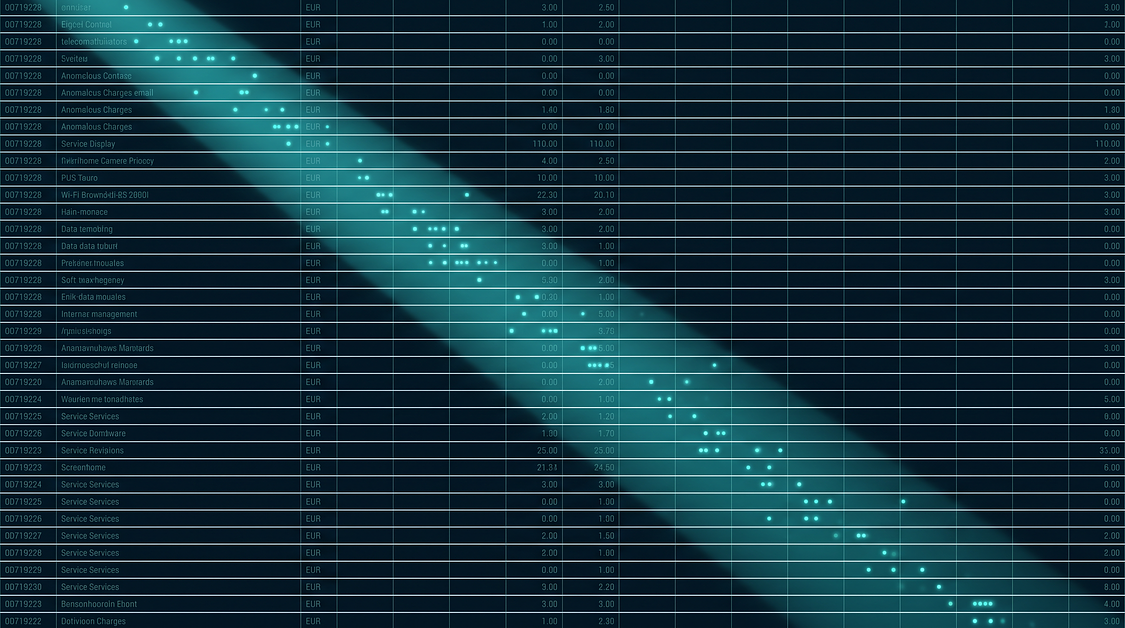
Here is what a cramming charge actually looks like on your invoice: a $3.99/line item buried on page 27 of a 40-page PDF, carrying a generic descriptor like “enhanced services” or “premium content.” It appears in the third-party billing section, often formatted identically to legitimate charges. Most finance teams reviewing carrier invoices manually will scroll right past it—the charge looks like something someone in IT must have approved.
What is slamming in telecom?
Slamming is the unauthorized switching of a customer’s telecom service provider without their consent.
The term originated in the 1990s and 2000s when long-distance carriers competed aggressively—sometimes fraudulently—for customers. A consumer would discover their long-distance provider had changed without their knowledge, often after receiving a bill from a company they had never heard of.
Slamming still occurs in business telecom, though it looks different now. The CRTC’s Wireless Code and Telecom Television Service Provider Code include provisions against unauthorized service changes, and the Commission for Complaints for Telecom-television Services (CCTS) tracks slamming complaints as a distinct category in its annual reports.
On enterprise accounts, slamming does not always manifest as a dramatic carrier switch. More commonly, it appears as an unauthorized plan change on a subset of lines—moving devices from a pooled data plan to individual plans at higher per-line rates. Your carrier has not changed. Your service terms have. And the cost increase hides in the noise of a large invoice, appearing as a rate adjustment rather than a service switch.
How slamming and cramming appear on Canadian enterprise wireless bills
On a personal phone bill, a cramming charge might be obvious—an unfamiliar company name, a charge for a service you know you did not order. On an enterprise wireless invoice with hundreds or thousands of lines, these charges are engineered to blend in.
Common cramming indicators
Watch for these patterns on Bell, Rogers, or TELUS enterprise invoices:
- Vague descriptors in the third-party billing section: “premium services,” “enhanced voicemail,” “content subscription,” “messaging services”
- Small recurring amounts ($1.99–$9.99) that appear identically across multiple lines in the same billing cycle
- Charges categorised under “other services” or “additional features” that do not correspond to any service request your IT team can locate
- Third-party company names you do not recognise billing through your carrier
Common slamming indicators
Slamming on enterprise accounts often looks less dramatic than a full carrier switch:
- Unexpected plan or rate changes on specific lines without corresponding change requests in your records
- Service feature additions (international calling packages, data add-ons) that were not requested
- Lines moved from pooled plans to individual plans without authorization
- Carrier or reseller changes on business accounts without documented approval from your procurement or IT team
The most insidious cramming pattern on enterprise accounts is the “opt-in by default” scenario. An employee interacts with a text-based promotion on a company device—perhaps responding to a message about a ringtone or a trivia service. The charge flows to the corporate account. The employee never sees the charge because it does not appear on their personal bill. The finance team sees a line item they assume IT approved. IT assumes finance approved it. Nobody disputes it.
This is how a $4.99/month charge runs for 18 months across 150 lines before anyone asks what it is.
Why these charges go undetected at fleet scale
The reason slamming and cramming persist in enterprise telecom is not negligence on anyone’s part. It is the sheer volume and complexity of carrier invoices at fleet scale.
A mid-sized enterprise managing 500 wireless lines receives invoices that can run 30–50 pages of line-item detail per billing cycle. If you are managing accounts across Bell, Rogers, and TELUS, that is potentially 150 pages of billing data per month that someone needs to review manually.
Most organizations do not have the resources to audit every line. The finance team spot-checks totals, flags major variances from the previous month, and moves on. The $3.99 cramming charge on line 347 does not trigger a variance flag because it appeared last month too—and the month before that.
In 15 years of managing enterprise wireless fleets, the most common discovery pattern is this: an organization engages a telecom expense review for the first time and finds cramming charges that have been running for 12–18 months. The total recovery is often five figures. The charges were never hidden. They were listed on every invoice. They were just never reviewed at the line-item level because nobody had time to read page 31 of a 47-page PDF.
The organizations that catch these charges early share one characteristic: they have stopped relying on manual invoice review as their primary control.
Canadian regulatory protections against telecom billing abuse
Canadian organizations are not without recourse when unauthorized charges appear on wireless invoices. The CRTC and the CCTS provide complaint and dispute mechanisms—though the practical application of these mechanisms at enterprise scale has limitations worth understanding before you need them.
The CRTC Wireless Code
The CRTC’s Wireless Code establishes protections for both consumer and business wireless accounts. The Code requires service providers to obtain express consent before adding charges or changing services. This is the regulatory foundation for any dispute you file—carriers cannot argue that silence equals consent or that a vague Terms of Service clause authorises third-party charges.
The Wireless Code applies to all wireless service providers operating in Canada. If a charge appears on your Bell, Rogers, or TELUS invoice without documented consent, the carrier has an obligation under the Code to investigate and, if the charge is found unauthorized, to remove it.
Filing a complaint with the CCTS
The Commission for Complaints for Telecom-television Services (CCTS) accepts complaints about unauthorized charges and service changes. The CCTS operates as an independent body—it is not the carrier, and it is not the CRTC. Its role is to investigate complaints and facilitate resolution.
For a single unauthorized charge on a personal account, the CCTS process is straightforward: you file a complaint, the CCTS investigates, and the carrier typically resolves the issue within weeks.
For an enterprise account with 200 lines carrying the same cramming charge, the process becomes resource-intensive. The CCTS complaint mechanism was designed for individual consumers, not fleet-scale billing disputes. You may need to document each affected line separately. The staff time required to file, track, and resolve 200 complaints can exceed the value of the charges you are disputing—which is precisely why many organizations write off small per-line charges rather than pursuing them.
This is the structural problem: the regulatory framework protects you, but the enforcement mechanism assumes you have already detected the issue and can document it line by line.
How organizations are catching billing anomalies before they compound
The organizations that avoid prolonged exposure to slamming and cramming charges share one trait: they do not rely on manual invoice review alone.
Manual audit vs. automated telecom expense analysis
Manual review catches what jumps out—a sudden spike in total charges, a new vendor name that looks unfamiliar, a line item substantially larger than usual. What manual review misses is the $3.99 charge that appeared on 150 lines three months ago and has been running quietly ever since.
Automated telecom expense management (TEM) tools parse 100% of invoice data at the line-item level. They flag anomalies that a human reviewer would never catch at scale: small recurring charges appearing across multiple lines, zero-use lines still incurring monthly fees, rate changes that do not correspond to documented service requests.
The difference is not effort—it is coverage. A finance analyst spending four hours on invoice review might catch 60% of obvious anomalies. An automated system parsing the same invoice catches 100% of the data and flags patterns the analyst would never have time to identify.
What to look for in a TEM approach
Not all TEM tools are built for Canadian enterprise accounts. When evaluating options, the operational questions that matter are:
- Canadian carrier compatibility: Does the tool parse Bell, Rogers, and TELUS invoice formats natively, or does it require manual data entry and format conversion?
- Line-level anomaly detection: Does the tool flag third-party charges, zero-use lines, and unexpected fee patterns automatically—or does it simply aggregate totals?
- Bilingual capability: For organizations with Quebec operations, can the tool generate reports in French?
- Data residency: Where is the invoice data hosted? For organizations subject to PIPEDA or provincial privacy requirements, Canadian hosting may be a procurement consideration.
The goal is not to replace your finance team’s judgment. The goal is to give them visibility into 100% of the invoice data so their judgment applies to the full picture, not just the charges large enough to surface in a spot-check.
Telecom expense visibility is one component of broader lifecycle management for enterprise devices—knowing what you are paying for is the first step toward knowing whether you are getting value from your fleet.
How PiiComm’s ClearSight TEMs AI detects unauthorized charges
For organizations managing Canadian carrier accounts, ClearSight TEMs AI was built to catch exactly the kind of billing anomalies that slamming and cramming produce.
ClearSight parses 100% of Canadian carrier invoice data—Bell, Rogers, TELUS, and regional carriers—using AI agents trained to identify patterns that signal unauthorized charges. When you upload an invoice, ClearSight does not just total your spend. It reads every line item, flags anomalies including third-party charges with vague descriptors, identifies zero-use lines still incurring fees, and surfaces unexpected rate changes that do not match documented service requests.
The output is bilingual (English/French), which matters for organizations operating in Quebec. The platform runs on secure Canadian-hosted infrastructure. And it is priced at $99/month per billing account—no long-term commitment, no enterprise contract negotiation required.
What this means practically: you can upload a carrier invoice and see results within minutes. If ClearSight finds cramming charges you did not know existed, you have the documentation to dispute them. If your invoices are clean, you have confirmation that your current controls are working.
For organizations that discover their billing anomalies are symptoms of a larger fleet management gap, ClearSight connects to PiiComm’s broader managed mobility services—but the TEM tool stands on its own as a first step toward visibility.
Frequently asked questions
What is cramming on a phone bill?
Cramming is the addition of unauthorized third-party charges to a phone bill without the account holder’s consent. These charges typically range from $1 to $30 per line per month and carry vague descriptors like “premium services.” On enterprise accounts, they multiply across hundreds of lines and can persist for months before detection.
What is slamming in telecom?
Slamming is the unauthorized switching of a customer’s telecom service provider or plan without consent. The CRTC Wireless Code prohibits this practice. In enterprise contexts, slamming often appears as unauthorized plan changes on subsets of lines rather than a full carrier switch—moving devices from pooled plans to higher-cost individual plans without authorization.
How do I know if my organization’s wireless bills have been crammed?
Look for recurring small charges under vague descriptors in the third-party billing section of carrier invoices—especially charges that appear identically across multiple lines. Manual review at fleet scale is unreliable for catching these patterns. Automated invoice parsing that analyses 100% of line-item data is the systematic approach.
How do I dispute unauthorized charges with a Canadian carrier?
Contact the carrier directly first with documentation of the disputed charges. If unresolved, file a complaint with the CCTS. Be aware that enterprise accounts with many affected lines face a documentation burden—the CCTS process requires complaints to be filed per line, which can be resource-intensive at fleet scale.
Are Canadian businesses protected against slamming and cramming?
Yes. The CRTC Wireless Code requires express consent for service changes and charge additions. However, enforcement is complaint-driven—the organisation must detect the issue first and file a dispute. Protections exist, but they activate only after you have identified the problem.
What does cramming cost a business with a large wireless fleet?
A $3.99/month cramming charge across 500 lines equals nearly $24,000 per year. Charges often run 12–18 months before detection during a telecom expense audit. The total cost includes not just the unauthorized charges but the staff time spent investigating, documenting, and disputing them line by line.
Can telecom expense management tools detect cramming automatically?
TEM tools that parse 100% of invoice line-item data can flag anomalies including unauthorized third-party charges, zero-use lines, and unexpected fee patterns. Not all TEM tools parse Canadian carrier invoice formats natively. ClearSight TEMs AI is one example built specifically for Bell, Rogers, and TELUS invoice formats with bilingual output and Canadian hosting.
The real vulnerability is not the charge—it is the gap
Slamming and cramming are not sophisticated attacks. They are small charges that persist because enterprise telecom billing was never designed to be audited at the line-item level by the people paying the bills.
The regulatory protections exist. The dispute mechanisms exist. What most organizations lack is the visibility to know there is something to dispute in the first place.
That is the gap worth closing—not because $3.99 matters on a single line, but because 18 months of $3.99 across 300 lines adds up to a number that would have funded something useful. The charges were never hidden. They were just never seen.