
Most “telecom sourcing” pitches collapse three different jobs into one focus: negotiating carrier contracts, auditing what those contracts actually bill, and buying the devices that ride on them. Those are three different companies with three different delivery models, and the one you need depends on which of them is costing you money right now. The fastest way to separate the field is to ask who performs the work and where, because that single answer sorts carrier-led providers from expense platforms from device operations providers.
Here’s the short version:
- PiiComm for Canadian enterprises sourcing frontline devices and carrier services with the lifecycle managed in-country
- Tangoe for telecom expense and carrier contract visibility across a large multi-country footprint
- TELUS Business for Canadian organisations sourcing connectivity and mobility together
- Calero for contract lifecycle management and invoice audit as a dedicated discipline
- brightfin for teams that want telecom spend management inside their existing IT service tooling
- Bell Business Markets for national carrier sourcing with device programs attached
- Rogers Business for organisations consolidating wireless contracts under one national carrier
One boundary worth setting before you evaluate anyone. Telecom sourcing usually means acquiring carrier services and contracts. Telecom expense management (TEM) means auditing and optimising what those contracts bill. Device procurement means sourcing the hardware itself, usually across multiple manufacturers. Several companies here sell one of the three under a label that sounds like all three, so this list flags which is which.
We’ve ordered these by who each one fits best, not by a universal ranking.
How we evaluated these providers
We assessed each provider on published service capabilities, public records, and named case studies as of August 2026. Most providers in this category don’t publish pricing and don’t hold a G2 or Capterra profile, so ratings and price aren’t the anchors here. What can be verified is:
- Delivery model. Who performs the work, whether that’s contract negotiation, invoice processing, or physical device handling, and in which country. This is the single most decision-relevant fact in the category, so it’s a mandatory criterion.
- Sourcing scope. Carrier contracts, device and accessory procurement, or both.
- Canadian operations. Documented in-country facilities, staff, and language capability.
- Credentials. OEM partnership tiers, platform certifications, analyst listings.
- Proof. Named public case studies and published scale figures.
- Commercial model. How engagements are structured, since almost none are published.
Assume pricing is quote-only unless an entry says otherwise, and assume no aggregated review score exists unless an entry says otherwise. We’ve noted those absences once here rather than repeating them seven times.
Telecom sourcing services at a glance
| Provider | Best for | Standout strength | Delivery model | Canadian operations |
|---|---|---|---|---|
| PiiComm | Canadian device and carrier sourcing | In-house Canadian lifecycle execution | In-house, own staff | Yes: Plantagenet, ON |
| Tangoe | Global expense and contract visibility | Expense platform at global scale | Software plus managed services | Not documented |
| TELUS Business | Connectivity and mobility together | Carrier-delivered sourcing and management | Carrier-delivered | Yes |
| Calero | Contract lifecycle and invoice audit | Dedicated expense management discipline | Software plus managed services | Not documented |
| brightfin | Spend management inside ITSM tooling | Platform integration with service management | Software platform | Not documented |
| Bell Business Markets | National carrier sourcing with devices | Network plus device programs bundled | Carrier-delivered | Yes |
| Rogers Business | Consolidating wireless contracts | Wireless-first national sourcing | Carrier-delivered | Yes |
The 7 best telecom sourcing services providers
1. PiiComm: best for Canadian enterprises sourcing frontline devices and carrier services with the lifecycle managed in-country
If your sourcing problem is that hundreds or thousands of scanners, handhelds, and tablets need to be bought, configured, supported, and eventually retired across Canadian sites, and the carrier billing sits on top of all of it, this is the profile PiiComm is built for. It’s Canada’s largest pure-play managed mobility services (MMS) provider, founded in 2007 and headquartered in Plantagenet, Ontario, and the physical work is done by its own staff in its own Canadian facility.
Services
- Strategic Sourcing. Vendor-neutral device and accessory procurement across Zebra, Honeywell, and Samsung, with configuration standardisation across sites.
- Staging & Deployment. Devices imaged, configured, kitted, quality-checked, and shipped deployment-ready in staged rollout waves.
- Lifecycle Management. Break/fix and repair logistics, advance-exchange spare device programs, asset and SIM tracking, and help desk support.
- MDM as a Service (MDMaaS). Certified administration of SOTI MobiControl and 42Gears SureMDM, covering policy, security, and OS update management.
- Secure Decommissioning. Certified data erasure to NIST 800-88, serialised certificates of destruction, and physical shredding of devices and SIM cards for non-viable assets.
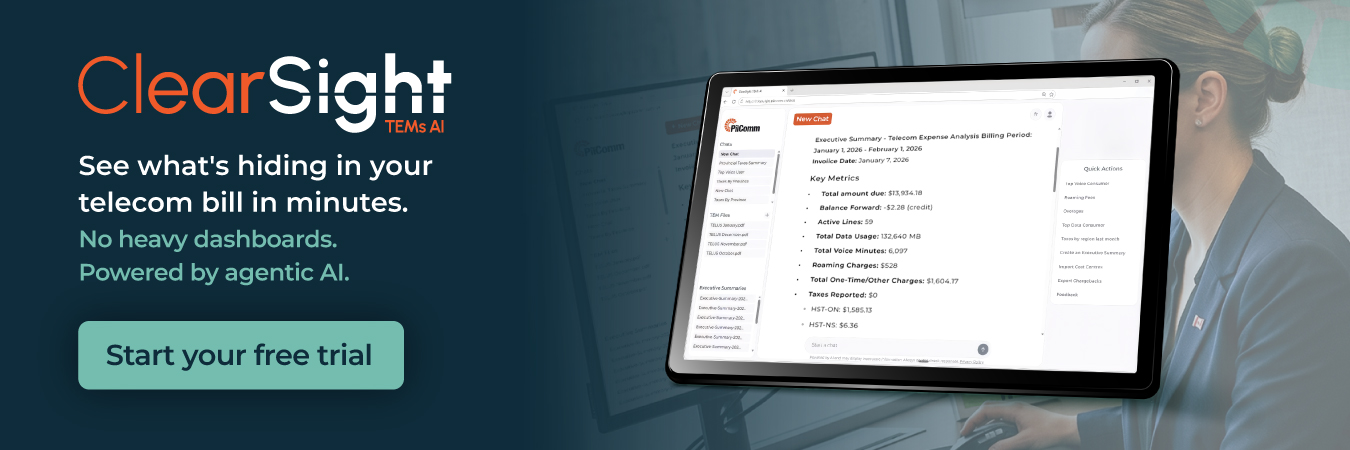
- ClearSight TEMs AI. AI-driven telecom expense intelligence across carrier billing for the managed fleet. Separately priced, not bundled into managed service contracts by default.
- Device as a Service (DaaS). Hardware, software, and lifecycle services bundled into a per-device monthly subscription.
Delivery model
- Headquartered in Plantagenet, Ontario, with staging, kitting, depot repair, warehousing, and data destruction performed at its own Canadian facility.
- Physical work performed by PiiComm’s own certified technicians rather than subcontractors.
- Reverse logistics and processing stay in Canada, which keeps break/fix and decommissioning shipments out of USMCA and CBSA handling.
- English and French service desk support staffed in Canada.
Pros
- Device sourcing, staging, repair, MDM administration, and decommissioning sit with one in-country team, which keeps chain-of-custody documentation in a single jurisdiction.
- Rugged and industrial device heritage rather than a corporate smartphone background, backed by Zebra Premier Solution Partner status, the highest partner tier.
- Certified on both SOTI MobiControlCertified on both SOTI MobiControl and 42Gears SureMDM, the platforms most Canadian rugged fleets already run, and administers Microsoft Intune and Omnissa Workspace ONE.
- Manages 500,000+ assets across thousands of North American locations, with named Canadian enterprise clients including Air Canada, Giant Tiger, KalTire, and Enterprise.
Proof points
- 500,000+ assets under management across thousands of North American locations.
- Zebra Premier Solution Partner, the highest partner tier, plus Honeywell and Samsung partnerships.
- Named public case studies including mission-critical device deployment to thousands of flight crew across Canada, and 800+ government devices physically destroyed with certificates of destruction issued.
- Data erasure to NIST 800-88 with serialised certificates of destruction; e-waste processed to Electronic Products Recycling Association standards.
Engagement model
- Managed service contracts, per-device per-month pricing, DaaS bundlesManaged service contracts, per-device per-month pricing, DaaS bundles, and project-based staging engagements. ClearSight is priced separately per billing account.
- Pricing isn’t published, so comparison requires a quote cycle. Confirm commercial terms directly with the provider.
Best for: Canadian enterprises with large distributed fleets of business-critical devices that want sourcing through secure decommissioning executed in-country by one team, with carrier expense intelligence layered on top.
2. Tangoe: best for global telecom expense and carrier contract visibility at scale
If your sourcing problem is that you can’t see what you’re spending across dozens of carriers in dozens of countries, Tangoe is a serious option. It isn’t a device logistics company, and it doesn’t need to be. It’s an expense-and-software-first platform operating telecom and .technology expense management at global scale, and that’s what it’s strong at.
Services
- Telecom expense management. Invoice processing, inventory, and spend optimisation across mobile, fixed, and cloud services.
- Managed mobility services. Mobility management delivered alongside the expense platform.
- Carrier spend visibility. Consolidated reporting across a multi-carrier, multi-country footprint.
- Managed expense services. The platform is paired with managed services rather than sold as software alone.
Delivery model
- Software platform plus managed expense services.
- No Canadian office is publicly documented.
- French-language support is not publicly documented.
Pros
- Operates telecom and technology expense management at global scale, which is the right shape if your footprint spans many countries and carriers.
- Expense and contract visibility is the core product rather than an attachment to something else, so the tooling depth is where the money is.
- Suited to organisations whose sourcing decisions are driven by spend data rather than device operations.
Cons
- Expense-first model: physical staging, repair, and decommissioning aren’t the core offer, so you’d pair it with a device operations provider if hardware is part of your scope.
- No Canadian office is publicly documented, which is worth asking about if your procurement policy requires in-country delivery.
- Help desk experience appears in Gartner reviews as a discussion point, so test support responsiveness during a pilot rather than assuming it.
Proof points
- Telecom and technology expense management delivered at global scale across mobile, fixed, and cloud.
- No Canadian facility documented on its public pages.
- No published Canadian case study found.
Engagement model
- Platform subscription plus managed services; pricing isn’t published. Confirm commercial terms directly with the provider.
Best for: Global enterprises whose primary sourcing pain is telecom spend and contract visibility across many countries rather than device operations.
3. TELUS Business: best for Canadian organisations sourcing connectivity and mobility together
If you’d rather buy network contracts, device catalogues, and mobility management as one relationship with one national carrier, TELUS Business is a strong fit. It’s a Canadian carrier that sells business connectivity alongside device procurement and mobility management services, which suits organisations that want fewer contracts rather than best-of-breed in each layer.
(Disclosure: TELUS is a referral and co-marketing partner of PiiComm. It’s on this list on its merits, assessed on the same criteria as everyone else.)
Services
- Business connectivity sourcing. Network and wireless services contracted directly with the carrier.
- Device procurement. Business device catalogues bought under the same carrier relationship.
- Managed mobility services. Mobility management offered alongside the network contract.
- Mobile device management. MDM services attached to the carrier’s mobility programs.
- Lifecycle and support services. Device support and lifecycle options within the carrier’s business portfolio.
Delivery model
- Carrier-delivered: connectivity, device catalogues, and mobility management bought through one carrier relationship.
- Canadian operations, with the carrier’s own national network and business support organisation.
- Service scope for each layer is defined by the specific program you contract, so confirm what’s included in your agreement.
Pros
- Sourcing connectivity and devices under one carrier contract reduces the number of relationships your team manages.
- Established national Canadian network and business support presence.
- Mobility management, MDM, and device procurement are available inside the same commercial relationship rather than bolted on from a third party.
Cons
- Device catalogues are shaped by the carrier’s own portfolio, so a vendor-neutral sourcing process across multiple OEMs may need a separate provider.
- Mobility management sits within a broader business portfolio rather than being the whole company, so ask which components are delivered directly and which are program-dependent.
- Published program details change, so confirm the current offering names and inclusions before you build a requirements matrix around them.
Proof points
- National Canadian carrier with documented Canadian operations.
- Business mobility and device programs published alongside connectivity services.
- Not listed in the Gartner Market Guide for Managed Mobility Services vendor set reviewed.
Engagement model
- Carrier contracts with service programs attached; pricing is quoted per agreement and isn’t published. Confirm commercial terms directly with the provider.
Best for: Canadian organisations that want network contracts, device catalogues, and mobility management sourced as one carrier relationship.
4. Calero: best for contract lifecycle and invoice audit as a dedicated discipline
If your sourcing problem is that nobody on your team has time to audit invoices against contract terms and renegotiate what’s already signed, Calero is worth shortlisting. It’s a telecom expense management specialist, not a device operations provider, and contract and invoice discipline is exactly what it sells.
Services
- Telecom expense management. Invoice validation, inventory, and spend reporting across telecom services.
- Contract lifecycle management. Managing carrier agreements as a tracked discipline rather than an annual scramble.
- Invoice audit. Reconciling billed charges against contracted terms.
- Managed services. The platform paired with managed expense operations.
Delivery model
- Software platform plus managed expense services.
- Canadian operations are not publicly documented.
- French-language support is not publicly documented.
Pros
- Expense management is the whole product, so contract and invoice work gets specialist attention rather than being a side capability.
- Fits organisations whose sourcing problem is auditing and renegotiating agreements already in place rather than deploying hardware.
- Suits teams that want the discipline maintained continuously rather than as a one-off consulting project.
Cons
- No physical device operations: staging, break/fix, and decommissioning aren’t part of the offer, so hardware scope needs a second provider.
- Canadian operations aren’t publicly documented, so confirm in-country delivery and language capability if your procurement policy requires them.
- Value depends on the quality of your existing contract and inventory data, so expect a data cleanup phase before results show.
Proof points
- Telecom expense management and contract lifecycle management published as core service lines.
- No Canadian facility documented on its public pages.
- Not listed in the Gartner Market Guide for Managed Mobility Services vendor set reviewed.
Engagement model
- Platform subscription plus managed services; pricing isn’t published. Confirm commercial terms directly with the provider.
Best for: Organisations with existing carrier agreements whose primary need is audit and renegotiation discipline rather than device sourcing or logistics.
5. brightfin: best for teams that want telecom spend sourcing inside their existing ITSM tooling
If your team has standardised on an IT service management stack and you’d rather not add another standalone console, brightfin is worth a look. It delivers telecom expense and mobility management through platform integration, which suits organisations that want spend data sitting where their service workflows already live.
Services
- Telecom expense management. Invoice processing, inventory, and spend reporting for telecom services.
- Mobility management. Mobile service and device administration delivered through the platform.
- ITSM integration. Expense and mobility data surfaced inside an existing service management environment rather than a separate tool.
- Managed services. Platform capability paired with managed expense operations.
Delivery model
- Software platform with managed service delivery.
- Canadian operations are not publicly documented.
- French-language support is not publicly documented.
Pros
- Integration with existing service management tooling keeps telecom spend in the same workflow your team already uses.
- Expense and mobility management in one platform rather than two separate vendors.
- A good structural fit for organisations consolidating on a service-management stack rather than adding point tools.
Cons
- No physical device operations: staging, repair, and secure decommissioning aren’t part of the offer.
- The integration advantage depends on you running a compatible service management platform, so confirm fit before it becomes a requirement.
- Canadian operations aren’t publicly documented, so ask where delivery and support are performed.
Proof points
- Telecom expense management and mobility management published as core service lines.
- No Canadian facility documented on its public pages.
- Not listed in the Gartner Market Guide for Managed Mobility Services vendor set reviewed.
Engagement model
- Platform subscription plus managed services; pricing isn’t published. Confirm commercial terms directly with the provider.
Best for: Organisations standardising on a service-management stack that want telecom spend and mobility data inside that environment rather than in a separate console.
6. Bell Business Markets: best for national carrier sourcing with bundled device programs
If you’re sourcing national connectivity and want device procurement and lifecycle options attached to the same agreement, Bell Business Markets belongs on the shortlist. It’s the business division of a national Canadian carrier, selling connectivity with mobility management and device programs alongside it.
Services
- Business connectivity sourcing. Network and wireless services contracted with the carrier.
- Device procurement. Business device programs bought under the carrier relationship.
- Managed mobility services. Mobility management offered with the connectivity contract.
- Mobile device management. MDM services available within the carrier’s business portfolio.
- Device as a Service options. Per-device bundling available within published business programs.
Delivery model
- Carrier-delivered: connectivity contracts with mobility and device programs attached.
- Canadian operations with a national network footprint.
- Which physical lifecycle functions are performed directly versus through program partners isn’t fully documented in published materials.
Pros
- Connectivity, device procurement, and mobility management available under one national carrier agreement.
- National Canadian coverage with an established business division.
- Suits organisations consolidating contracts rather than assembling separate providers per layer.
Cons
- Mobility management sits alongside the network business rather than being the whole business, so scope depth varies by program.
- Staging and depot repair aren’t documented as published components, so confirm which physical functions are included and who performs them.
- Device catalogues follow the carrier’s own portfolio, which limits vendor-neutral sourcing across multiple OEMs.
- Offering names and program inclusions change, so verify current scope directly rather than relying on published summaries.
Proof points
- National Canadian carrier with documented Canadian operations.
- Business mobility, device procurement, and Device as a Service programs published within the business portfolio.
- Not listed in the Gartner Market Guide for Managed Mobility Services vendor set reviewed.
Engagement model
- Carrier contracts with attached service and device programs; pricing quoted per agreement and not published. Confirm commercial terms directly with the provider.
Best for: Canadian organisations sourcing national connectivity that want device programs and mobility management attached to the same carrier agreement.
7. Rogers Business: best for organisations consolidating wireless contracts under one national carrier
If your fleet is spread across multiple wireless agreements and the goal is to consolidate under one national carrier, Rogers Business is worth evaluating. It’s the business division of a national Canadian carrier with a wireless-first sourcing and procurement offer.
Services
- Wireless service sourcing. Business wireless contracts across a national network.
- Device procurement. Business device programs purchased under the carrier agreement.
- Managed mobility services. Mobility management offered alongside wireless contracts.
- Mobile device management. MDM services available within the business portfolio.
- Device as a Service options. Per-device bundling available within published business programs.
Delivery model
- Carrier-delivered: wireless contracts with mobility and device programs attached.
- Canadian operations with a national network footprint.
- Which physical lifecycle functions are performed directly versus through program partners isn’t fully documented in published materials.
Pros
- Consolidating multiple wireless agreements under one national carrier simplifies contract administration.
- Device procurement and mobility management available inside the same relationship as the wireless contract.
- National Canadian coverage with an established business division.
Cons
- Wireless-first scope: if your sourcing problem includes rugged device staging and depot repair, those aren’t documented as published components.
- Mobility management sits alongside the network business rather than being the whole business, so program depth varies.
- Offering names and program inclusions change, so verify current scope directly before building requirements around them.
Proof points
- National Canadian carrier with documented Canadian operations.
- Business mobility, device procurement, and Device as a Service programs published within the business portfolio.
- Not listed in the Gartner Market Guide for Managed Mobility Services vendor set reviewed.
Engagement model
- Carrier contracts with attached service and device programs; pricing quoted per agreement and not published. Confirm commercial terms directly with the provider.
Best for: Canadian organisations with fragmented wireless agreements that want them consolidated under one national carrier relationship.
Narrowing your shortlist
Start with the question that sorts this list fastest: is your primary problem the cost of carrier contracts, or the operations of the devices attached to them? If it’s contracts and invoices, the expense management specialists earn the shortlist. If it’s devices being bought, configured, supported, and retired across Canadian sites, you want a provider whose own staff perform that work, and you want to know which country they perform it in. If it’s genuinely both, ask each candidate to document exactly which functions they deliver directly and which come through a program partner.
If in-country execution across device sourcing and the physical lifecycle is on your requirements list, talk to us. We’ll walk you through how we’d run your fleet.
Frequently asked questions
What is telecom sourcing?
Telecom sourcing is the process of acquiring telecom services, carrier contracts, and the devices that use them. It typically covers requirements definition, carrier selection, contract negotiation, and ongoing contract administration. Some providers extend it to device and accessory procurement, and some stop at the carrier agreement. Confirm which definition a given provider is working from before you compare offers.
What’s the difference between telecom sourcing, telecom expense management, and device procurement?
Telecom sourcing is acquiring the services and contracts. Telecom expense management (TEM) is auditing, validating, and optimising what those contracts bill once they’re in place. Device procurement is buying the hardware itself, usually across multiple manufacturers. Providers frequently sell one of the three under language that implies all three, so ask which functions they perform directly.
What are the three types of telecom sourcing?
In procurement practice, sourcing is usually grouped as strategic sourcing, tactical or transactional sourcing, and outsourced or managed sourcing. In procurement practice, sourcing is usually grouped as strategic sourcing, tactical or transactional sourcing, and outsourced or managed sourcing. Strategic sourcing focuses on long-term supplier relationships and total cost. Tactical sourcing handles individual purchases against defined requirements. Managed sourcing hands the process to a provider who runs it on your behalf. Telecom engagements can use any of the three.
Who are the major telecom carriers in Canada?
TELUS, Bell, and Rogers are the three national carriers serving Canadian business customers, each operating its own national network and a business division that sells connectivity alongside mobility and device programs. Regional carriers also operate in specific provinces. Which one fits depends on your coverage requirements, existing agreements, and whether you want device programs bundled into the same contract.
What do telecom sourcing services cost?
None of the providers on this list publish pricing. Engagements are typically structured as managed service contracts, per-device per-month pricing, platform subscriptions, project-based work, or carrier agreements with programs attached. Cost depends on fleet size, service scope, device mix, and how much of the work you’re handing over. Get both the commercial model and the delivery model in writing before comparing quotes.
What mistakes do teams make when sourcing telecom services?
The common ones: treating carrier contract negotiation and device operations as the same purchase, not asking who physically performs staging, repair, and decommissioning, and comparing quotes without comparing scope. Teams also underestimate the data cleanup required before expense audits produce results. Ask each provider to name which functions they deliver with their own staff and which come through a partner.
Does it matter whether your telecom sourcing provider operates in Canada?
It can. Quebec’s Law 25 requires privacy impact assessments before personal information is transferred outside the province, and Bill 96 carries French-language obligations. PIPEDA remains the operative federal privacy standard, since Bill C-27 died on prorogation in January 2025. Cross-border repair and decommissioning also add customs and brokerage handling to every physical shipment. Ask any provider where the work is performed.
Can one provider handle both carrier contracts and device sourcing?
Some can. Carriers sell connectivity with device catalogues attached, and device-operations providers can layer expense intelligence over carrier billing. The practical test is scope depth: ask whether contract negotiation, invoice audit, device procurement, staging, repair, and decommissioning are each performed directly, and by whom. Many single-provider answers turn out to be one function delivered directly and the rest through partners.
Why do teams pick PiiComm for telecom expense sourcing?
Usually because device sourcing and the physical lifecycle are executed in-country by PiiComm’s own team rather than split across subcontractors: vendor-neutral procurementUsually because device sourcing and the physical lifecycle are executed in-country by PiiComm’s own team rather than split across subcontractors: vendor-neutral procurement across Zebra, Honeywell, and Samsung, staging in its own Canadian facility, break/fix and advance-exchange spare device programs, certified MDM administration, and documented chain of custody at decommissioning, with ClearSight TEMs AI as the expense intelligence layer over carrier billing.